Devonian
Life
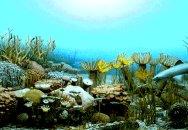 The
Devonian period brought significant diversification of terrestrial
life, including the first vertebrates, the amphibians, and the
first forests of trees appeared; this completed a land colonization
process that likely started in the late Cambrian. So too did
marine life increase in diversity and complexity. In fact,
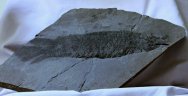
the Devonian is sometimes called the "Age of Fishes". The
lobe-finned fishes (Sarcopterygii) and ray-finned
fish (Actinopterygii) appear.
Among the Sarcopterygii,
the first fish evolved legs to The
Devonian period brought significant diversification of terrestrial
life, including the first vertebrates, the amphibians, and the
first forests of trees appeared; this completed a land colonization
process that likely started in the late Cambrian. So too did
marine life increase in diversity and complexity. In fact,
the Devonian is sometimes called the "Age of Fishes". The
lobe-finned fishes (Sarcopterygii) and ray-finned
fish (Actinopterygii) appear.
Among the Sarcopterygii,
the first fish evolved legs to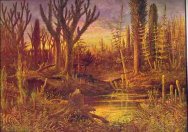 walk on land as tetrapods some 365 million years ago. Class Chondrichthyes
fishes (sharks, rays and skates) become more common, larger,
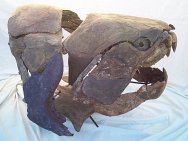
and fiercer. The Placoderm
armoured fishes enjoyed their greatest diversity
in the Devonian, only to mysterious disappear at the end of the
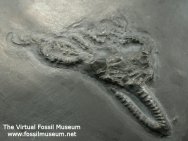
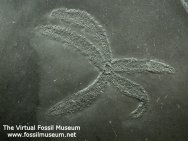
period. Among invertebrates, the ammonite mollusks appeared,
and crinoids, coral, and brachiopods remained common and
thriving.
The first seed-bearing plants spread across dry land, ultimately
forming huge forests. Early Devonian plants lacked
roots and leaves
and mostly lacked vascular tissue, and where tiny. They probably
spread largely by vegetative growth, and did not grow
much more
than a few centimeters tall. However, by the late Devonian, primitive
plants such as the lycophytes, sphenophytes, ferns,
and progymnosperms
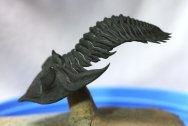
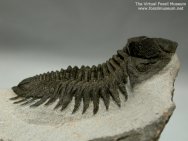
had formed widespread forests. The Late Devonian extinction severely
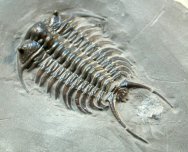
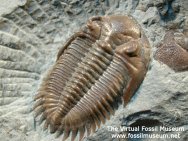
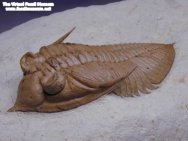
affected marine life, particularly brachiopods, trilobites,
ammonites,
conodonts, and acritarchs, jawless fish, and placoderms.
walk on land as tetrapods some 365 million years ago. Class Chondrichthyes
fishes (sharks, rays and skates) become more common, larger,
and fiercer. The Placoderm
armoured fishes enjoyed their greatest diversity
in the Devonian, only to mysterious disappear at the end of the
period. Among invertebrates, the ammonite mollusks appeared,
and crinoids, coral, and brachiopods remained common and
thriving.
The first seed-bearing plants spread across dry land, ultimately
forming huge forests. Early Devonian plants lacked
roots and leaves
and mostly lacked vascular tissue, and where tiny. They probably
spread largely by vegetative growth, and did not grow
much more
than a few centimeters tall. However, by the late Devonian, primitive
plants such as the lycophytes, sphenophytes, ferns,
and progymnosperms
had formed widespread forests. The Late Devonian extinction severely
affected marine life, particularly brachiopods, trilobites,
ammonites,
conodonts, and acritarchs, jawless fish, and placoderms.
Devonian
Fossils
|