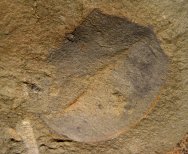
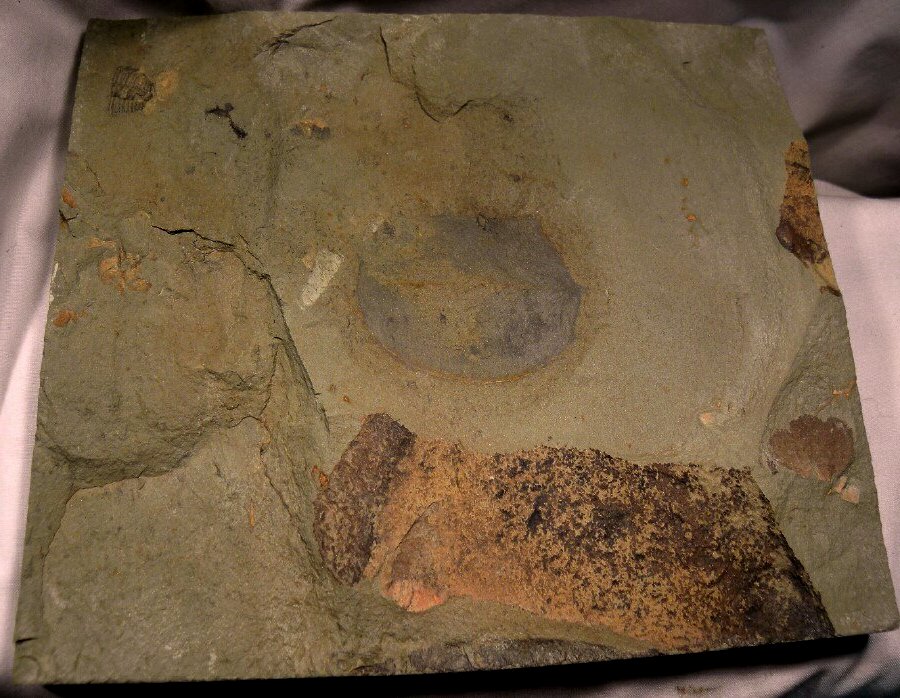
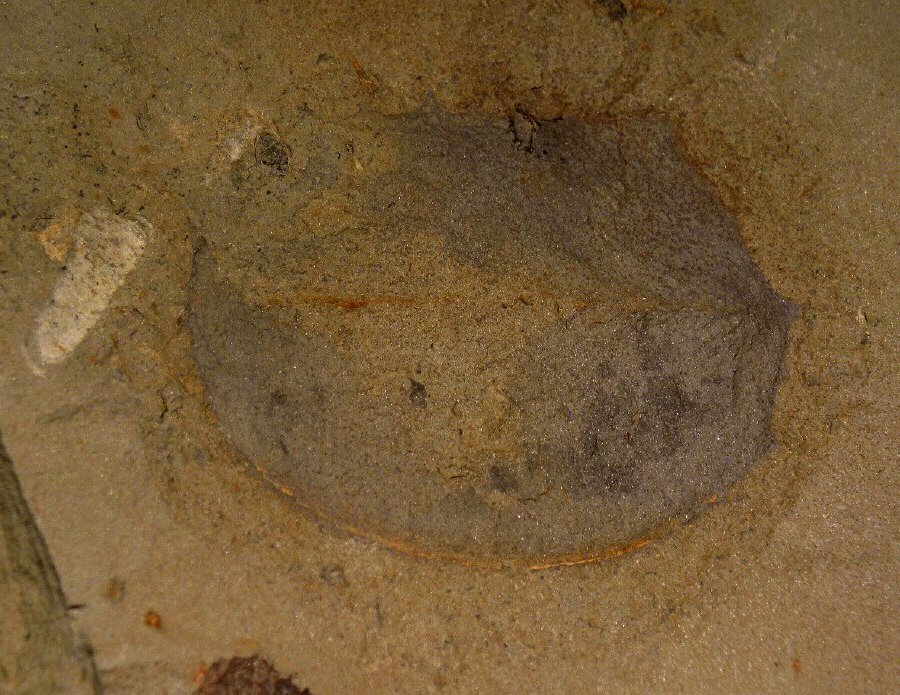
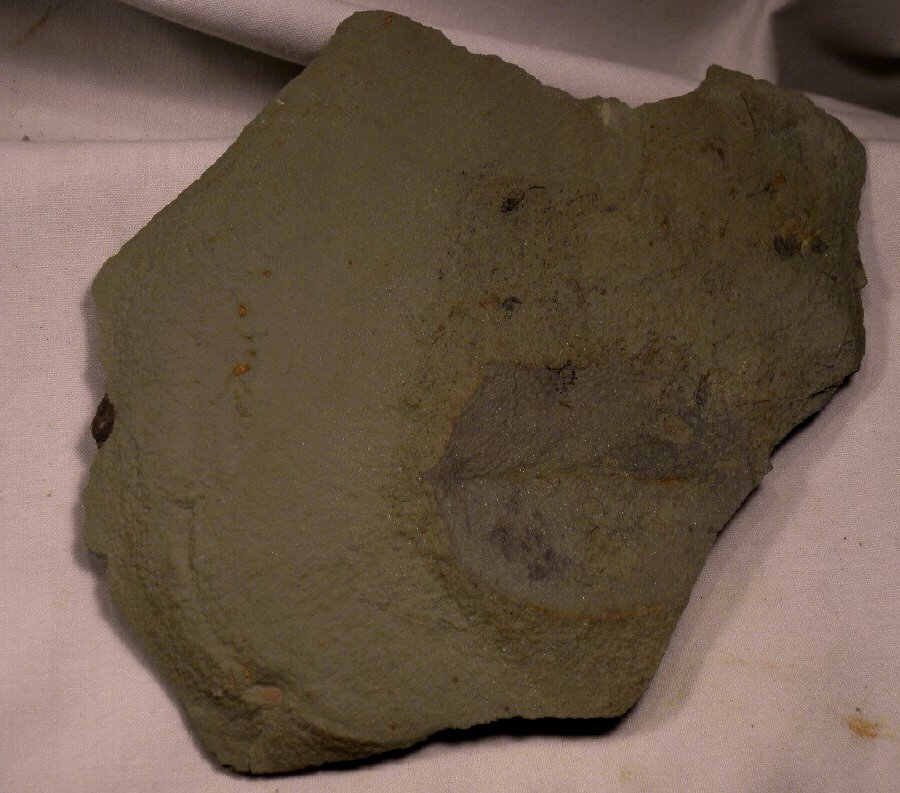
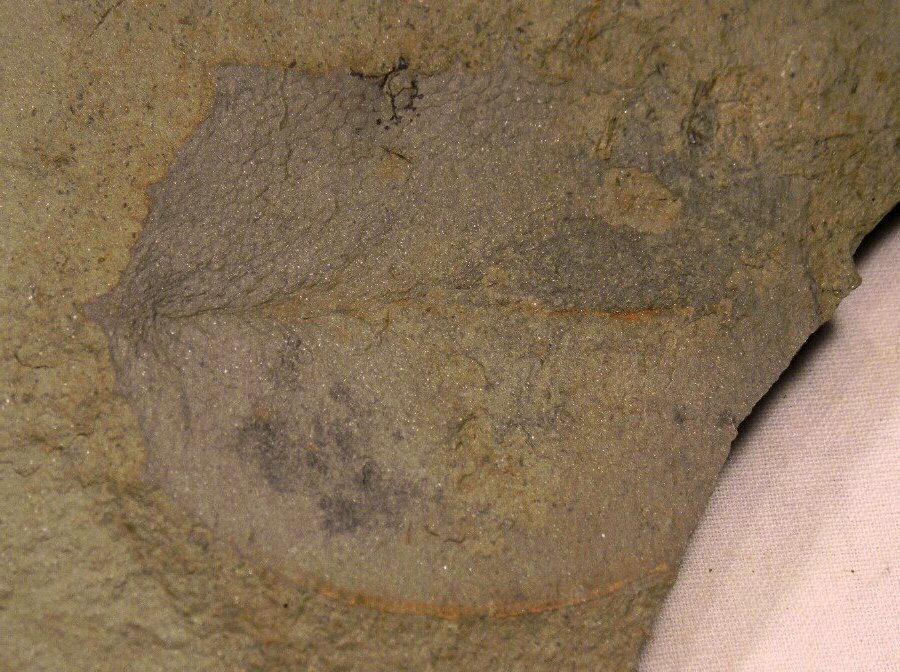
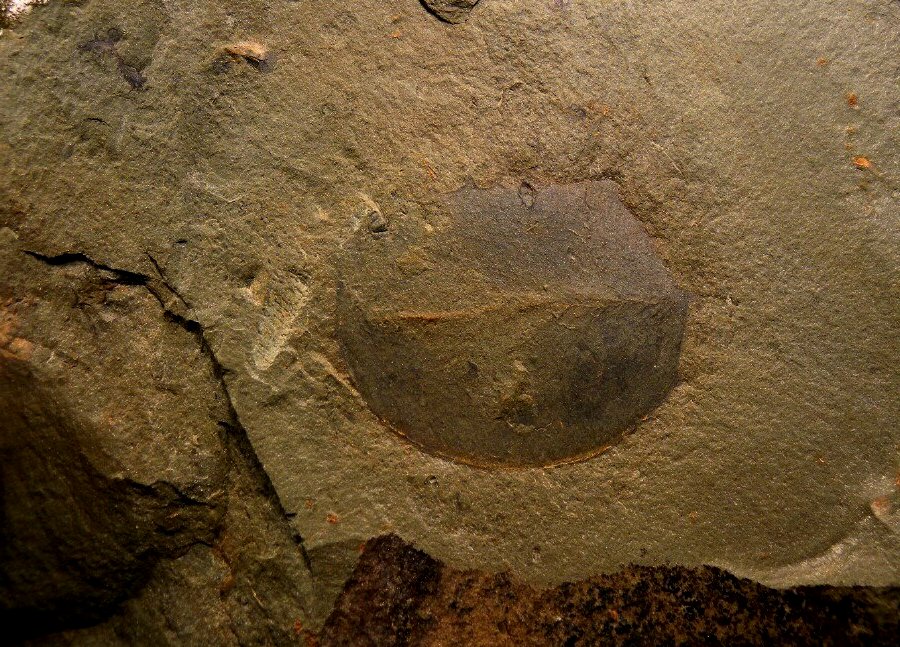
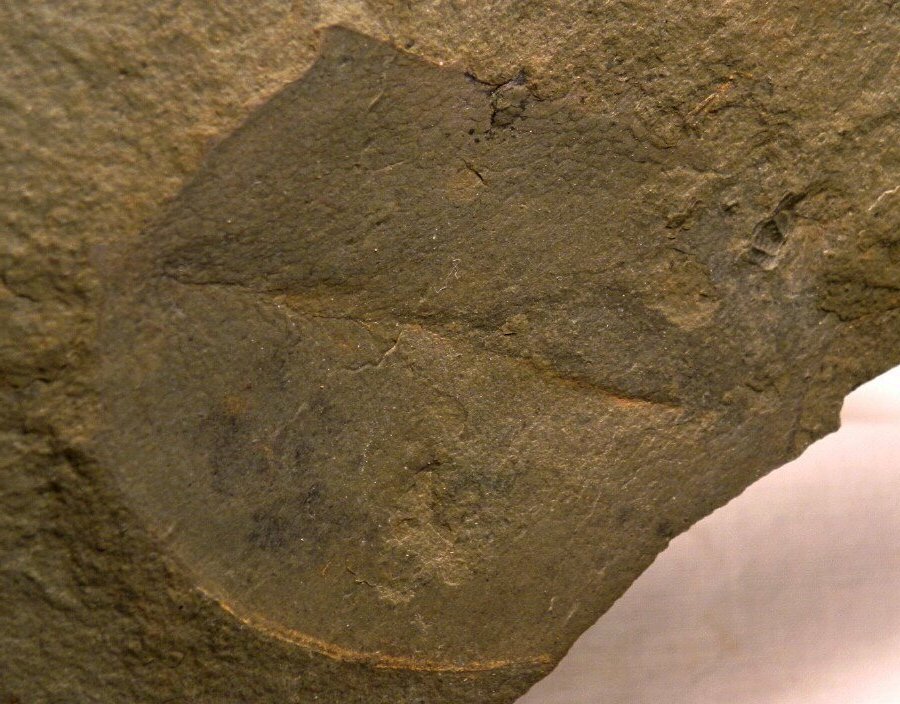
Tuzoia sp
Phylum Arthropoda, Subphylum Crustacea, Class Malacostraca, Subclass Phyllocaridae
or
Phylum Arthropoda (Euarthropoda stem group)
Geological Time: Early Middle Cambrian, (~ 515 million years ago)
Size: Fossil is 50 mm long
Fossil Site: Comet Shale Member, Pioche Formation, Lincoln County, Nevada
|
This
one comes from Nevada’s Pioche Formation the
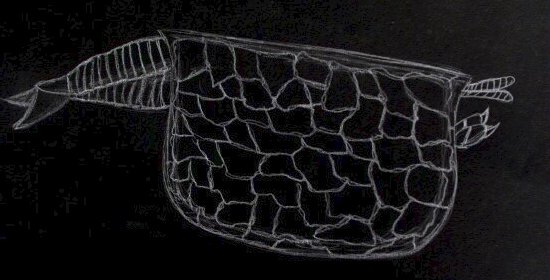
lower strata of which is actually Like Branchiocaris pretiosa from the Wheeler Formation of Utah, the affinity of Tuzoia is disputed, with some ranking it as stem arthropod and others as a phyllocarid crustacean (Lieberman, 2003). Additionally, Vannier et al., 2007, notes shared characteristics with Burgess Shale and Maotianshan Shales arthropod genus Isoxys. Resolving the affinity dispute requires fossils with still better preserved details. Tuzoia is described as a free-swimming animal having a big protective bivalve carapace, with or without spines, large spherical eyes, thin antennae, and substantial frontal appendages with six segments for grabbing food. Also see: Pioche Formation Fossils Fossils of the Cambrian Explosion from Utah References:
|