Waptia
(Chuandianella) ovata
Phylum
Arthropoda (Crustaceanomorpha), Extinct Order Waptiida, Family
Waptiidae
Geological
Time: Early Cambrian (~525 million years ago)
Size: 18
mm long (plus antennae); shell: 10 mm long by 8 mm across
Fossil
Site: Changjiang Maotianshan Shales, Quiongzhusi Section, Yu’anshan
Member, Heilinpu Formation, Mafang Village , Anning, Kunming, Yunnan Province,
China
Note: This
description, from circa 1993-94 is superceded by more recent research,
and the study of more and better specimens, but is here retained due
to historical interest. See Chuandianella
ovata for
an up-to-date summary.
|  Description:
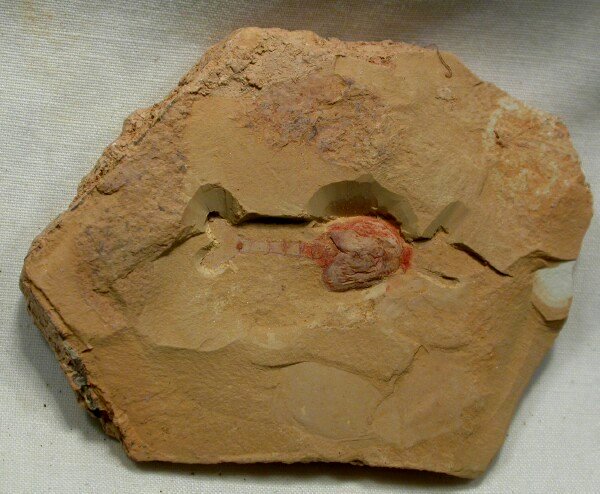
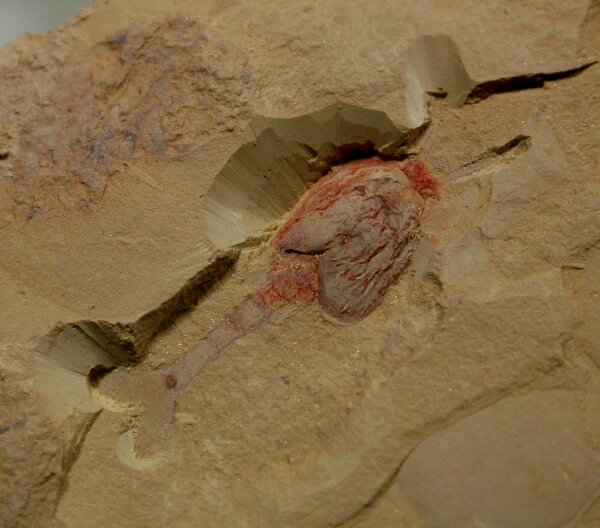
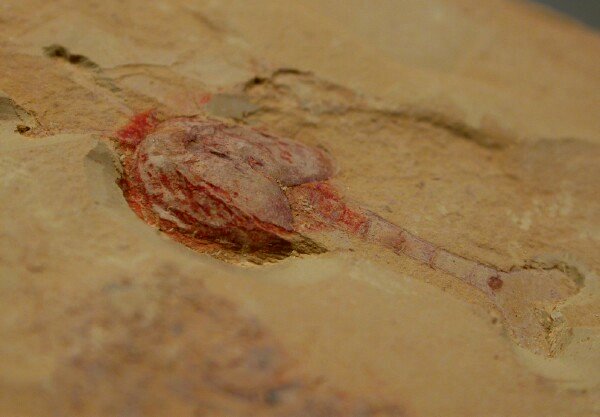
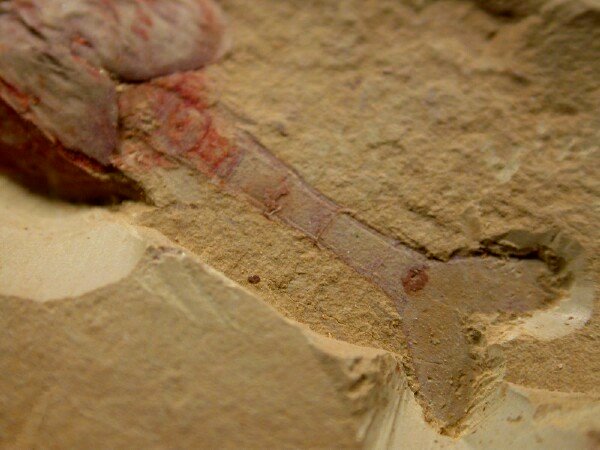
This unusual arthropod is known as Waptia ovata. The species
is
known for a distinctively wrinkled carapace. This specimen
has conderable soft tissue preserved. When Hou Xian-guang
discovered the Chengjiang
Biota in
1984 it ushered in much research into what has long been termed
the Cambrian
Explosion.
The site yielded a huge diversity of of fossils with soft tissue
well preserved. including: algae, annelid-like worms, chordates,
echinoderms, hemichordates, medusoids, priapulid worms, sponges,
and a large number of arthropods
(including trilobites), and, importantly, the first Description:
This unusual arthropod is known as Waptia ovata. The species
is
known for a distinctively wrinkled carapace. This specimen
has conderable soft tissue preserved. When Hou Xian-guang
discovered the Chengjiang
Biota in
1984 it ushered in much research into what has long been termed
the Cambrian
Explosion.
The site yielded a huge diversity of of fossils with soft tissue
well preserved. including: algae, annelid-like worms, chordates,
echinoderms, hemichordates, medusoids, priapulid worms, sponges,
and a large number of arthropods
(including trilobites), and, importantly, the first
 putative
agnathan fish. There were also a large number of
problematic
forms that likely did not persist very long in this early Cambrian
span, and left no ancestors during modern times. putative
agnathan fish. There were also a large number of
problematic
forms that likely did not persist very long in this early Cambrian
span, and left no ancestors during modern times.
 The
systematic position of this taxon has undergone several revisions,
and more can be anticipated.
It was originally placed within the Ostracodiform genus Mononotella,
then later referred to a new genus Chaundianella. More recent
finds
of remains other than the carapace have shown it to be similar
to the Burgess Shale genus
Waptia. While the species is known from other Lower Cambrian
locations
in Yunnan, Sichuan, Guizhou, and
Shaanxi Provinces, only those from the Chengjiang Biota are known
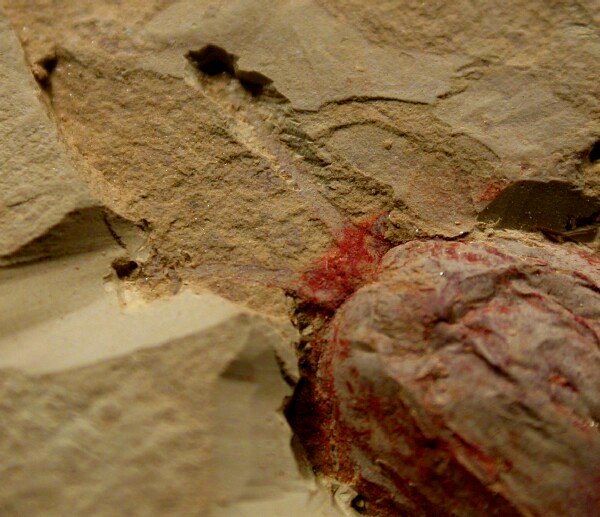
to show soft part preservation. This one shows the antennae preserved
as well. The negative image makes the antennae
more apparent. Note as well the 3-D nature of the shells, as most
unusual preservation occurrence. The
systematic position of this taxon has undergone several revisions,
and more can be anticipated.
It was originally placed within the Ostracodiform genus Mononotella,
then later referred to a new genus Chaundianella. More recent
finds
of remains other than the carapace have shown it to be similar
to the Burgess Shale genus
Waptia. While the species is known from other Lower Cambrian
locations
in Yunnan, Sichuan, Guizhou, and
Shaanxi Provinces, only those from the Chengjiang Biota are known
to show soft part preservation. This one shows the antennae preserved
as well. The negative image makes the antennae
more apparent. Note as well the 3-D nature of the shells, as most
unusual preservation occurrence.
Images
provided by: Eclectic Irony
Also
see: Chengjiang
Biota, Chengjiang
Fossils, Cambrian
Explosion
|
|