Fossils
The
term “fossil” is used
for any trace of past life. Fossils are not only the
actual remains of organisms, such as teeth, bones,
shell, and leaves (body fossils), but also the results
of their activity, such as burrows and foot prints
(trace fossils), and organic
compounds they produce by biochemical processes (chemical
fossils). Occasionally, inorganically produced
structures may be confused with traces of life, such
as dendrites. These are called pseudofossils.
The definitions below explain the types of fossils
found in the context of fossilization processes. You
will find there is some overlaps in the terminology
commonly used in paleontology and geology.
Body
Fossils
The processes of fossilization are complex with many
stages from burial to discovery as a fossil. Organisms
with hard parts such as a mineralized shell, like
a trilobite or ammonite, are much more likely to become
fossilized than animals with only soft parts such
as a jellyfish or worms. Body fossils of plants and
animals almost always consist only of the skeletonized
or toughened parts because soft tissues are destroyed
by decay or by scavengers. Even hard parts can be
destroyed by natural processes such as wave action
or can be eaten or destroyed by other organisms like
fungi and algae. Many species of plant and animal
fossils are known only from their fragments.
The
remains of an organism that survive natural biological
and physical processes must then become quickly buried
by sediments. The probability for an organism to become
fossilized increases if it already lives in the sediment
, and those on the sea floor are more readily fossilized
than those floating or swimming above it. Catastrophic
burial with a rapid influx of sediment is necessary
to preserve delicate complete animals such as crinoids
or starfish. This explains why most crinoids, for
example, are found only as stem pieces. Since crinoids
were not usually buried quickly, their hard stem parts
are far more frequently found as fossils. Observations
of rare living crinoids have shown that they will
rapidly disarticulate within a few days of death.
Rapid burial, in contrast, prevents this disintegration,
and thus explains a few localities where beds of delicate
crinoids, starfish and brittle stars are preserved
in their entirety. Thus many factors affect of chances
for fossilization.
The
common processes occurring after burial include chemical
alteration or replacement and compaction. Most marine
invertebrates have calcareous skeletons containing
calcium carbonate (CaCo3) that occurs in one on two
crystal forms, calcite or aragonite. Aragonite is
comparatively unstable and will convert to calcite
or dissolve over time. As a result, aragonite becomes
progressively rarer in older rocks. If the calcite
or aragonite is dissolved away the result is a fossil
being preserved as a mold or cast. In contrast, the
original calcite or aragonite might be replaced with
other minerals such as silica or pyrite or a similar
iron-containing mineral called hematite. Calcium phosphate
is another important, but less common, skeletal material
occurring in some arthropods, inarticulate brachiopods
and conodonts. Apatite, a calcium phosphate mineral,
is also found in bones and teeth of vertebrates. These
are the most common replacement minerals other than
calcite.
Soft Tissue Fossilization
It is possible to infer a certain amount about the
missing soft parts of fossils by comparing them to
living relatives. Information can be so deduced from
traces such as muscle scars left on a skeleton for
example. The preservation of soft parts is rare but
scattered examples are found throughout the world
at various localities. Examples of soft part fossil
preservation include the frozen Siberian mammoths
and ground sloth fur and feces. Preservation in this
case is dependent on local climatic conditions and
such fossils are unlikely to survive any significant
amount of geological time since climate changes. Older
soft bodied preservation due to protection from decay
and scavenging under anaerobic conditions (without
oxygen) especially at low temperatures rarely occurs.
Decay is slowed allowing more time for soft parts
to be buried and preserved. Despite the rarity, there
are hundreds of fossil sites worldwide where soft
tissue parts are preserved. Such a fossil site is
known as a Lagerstätte.
Examples include the early Cambrian Burgess
Shale of Canada and Maotianshan
Shales of China, the Carboniferous Mazon
Creek Formation, and the Eocene Messel Pit of
Germany.
Simple Burial
Limy shells and plant remains often lie in the ground
without much change. Cones, stems, stumps, and fern
roots in peat bogs have been known to exist up to
40 million years with little change, except for some
discoloration and slight decay. The remarkable preservation
in these peat bogs is due to the high concentration
of tannic acid. Mollusk shells, sand dollars and sea
urchins with ages ranging from a few thousand years
to 75 million years have been known to survive with
little change, except the loss of color. Occasionally,
ammonite fossils show the original iridescence present
when they were alive. The clam fossil of the Spanish
Point Formation of California is a good example of
shells that have undergone little change.
Imprints
Imprints are simply the external molds of very thin
organisms, such as leaves and trilobites. They are
often found in rocks such as sandstone, shale and
volcanic ash. Trilobites of the Marjum Formation in
Utah are often found as impressions.
Trace
Fossils or Ichnofossils
Trace fossils, also called ichnofossils are structures
preserved in sedimentary rocks that record biological
activity. Though trace fossils are often less interesting
to view, they are very important because they represent
both the anatomy of the maker in some way as well
as its behavior. Sedimentary structures made by empty
shells rolling along the sea floor are thus not trace
fossils because they do not represent the anatomy
of their maker. Trace fossils include footprints,
tracks and trail marks, burrows, borings, feeding
marks, and coprolites (fossilized droppings). The
conditions under which animal remains are found differ
from those favoring the survival of trace fossils
they produce. The two are rarely found together. It
is often difficult to determine what animals made
a trace fossil with confidence. Traces made by wildly
different animals can be very similar in appearance.
Therefore trace fossils are classified according to
the activity producing them rather than the animal
that made them: resting, crawling, feeding, dwelling,
etc. The majority of these trace fossils were made
by infaunal (living in sediment) animals, especially
deposit feeders like worms. Worm trails in Cambrian
sediments are common. Bird tracks at some locations
in the Green River Shales of Wyoming and Utah are
also common.
Trails, Tracks and Burrows
Tracks, trails and burrows are a particular form of
trace fossil. These traces
range from the worm trails to dinosaur tracks and
even the footprints of Stone Age people. The tracks
of worms, amphibians, reptiles and birds are common
at some localities. A great variety of invertebrate’s
tracks have been found. Trilobite and even insects
tracks are found commonly at some localities. Burrows
of worms, snails and crabs are known as well as their
petrified remains. Worm trails are often found in
the Cambrian
Wheeler Shale of Utah. Bird tracks are common
in the Green
River Formation of Utah in some locations.
Freezing
Freezing is a type of preservation in which an animal
falls into a crevasse or pit and remains frozen. Such
ideal remains are rare and almost always never very
old. Animals have been restricted to ice age rhinoceros
and hairy mammoth. These remains have preserved bone,
skin, muscle, hair and even internal organs.
Drying
or Dessication
Remains of animals that have been found thoroughly
dried include camel, ground sloth and even marsupial
wolf. These remains were found in caves in arid and
semi-arid areas of the Southwestern United States,
South America, New Zealand and Australia. The dried
dung of cave dwelling giant ground sloths have also
been found in caves.
Petrification
Petrification is a geology term denoting the processes
by which organic material is converted into stone
or a similar substance. It is approximately synonymous
with fossilization. Petrified wood is the most well
known result of this process. Petrification takes
place in two related ways, replacement
and permineralization,
described below.
Replacement
Replacement takes place when water dissolves the original
hard parts and replaces them with mineral matter.
This chemical action may take place slowly, reproducing
the microscopic structures of the original organism.
Bone, shells and wood are often well preserved in
this manner. The most common replacement minerals
are calcite, silica, pyrite and hematite. The snails
of the Green River Formation in Wyoming are often
replaced by silica, a variation of quartz. The ammonites
and goniatites of Europe and North Africa are commonly
replaced by hematite, which is an iron mineral similar
to, but more stable than pyrite. When the original
hard parts are replaced quickly they often loose all
trace of their original structure, leaving the original
shape, but no detail. Agatized woods are often preserved
in this manner, (agate is a form of quartz).
Perimineralization
Permineralization takes place when ground water carrying
dissolved minerals infiltrates the microscopic pores
and cavities in bone, wood or shell. The minerals
being deposited produce stony fossils that still contain
a good deal of their original solid material. Bones,
teeth and many marine organisms are preserved in this
way. The fossil wood from the Petrified Forest of
Arizona are a famous example of this type of preservation.
The fossil
teeth and bones of the Oligocene badlands of South
Dakota and Nebraska are also common example of this
type of fossilization, as well as the extensive deposits
of Jurassic dinosaur bones in Utah and Colorado.
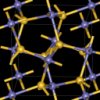 Pyritization
is a Permineralization process involving sulfur and
iron, and can result is formation of exquisite fossils
and soft-tissue preservation.
Organisms are pyritized when they are in marine sediments
saturated with iron sulfides. Pyrite is iron sulfide
(FeS2). As organic matter decays it releases sulfide
which reacts with dissolved iron in the surrounding
waters. Pyrite replaces carbonate shell material due
to an undersaturation of carbonate in the surrounding
waters. Some plants are also pyritized when they are
in a clay terrain, but to a lesser extent than in
a marine environment. Pyritized fossils are varied
and particularly beautiful, such as this Jurassic
Quenstedticeras
ammonite and fossils from the Bundenbach
Hunsruck Slate in Germany.
Pyritization
is a Permineralization process involving sulfur and
iron, and can result is formation of exquisite fossils
and soft-tissue preservation.
Organisms are pyritized when they are in marine sediments
saturated with iron sulfides. Pyrite is iron sulfide
(FeS2). As organic matter decays it releases sulfide
which reacts with dissolved iron in the surrounding
waters. Pyrite replaces carbonate shell material due
to an undersaturation of carbonate in the surrounding
waters. Some plants are also pyritized when they are
in a clay terrain, but to a lesser extent than in
a marine environment. Pyritized fossils are varied
and particularly beautiful, such as this Jurassic
Quenstedticeras
ammonite and fossils from the Bundenbach
Hunsruck Slate in Germany.
Molds
and Casts
An organism will lie in sediment until the surrounding
sediment becomes firm. Later the organism dissolves
away. If there is no infilling of the cavity with
mineral, sand or clay this is called a natural mold.
The outside of the mold, which would have been the
outer surface of the animal, is referred to as an
external mold. This often has the fine detail of the
surface of the original organism. The inside surface
of the mold is referred to as the internal mold, (sometimes
miscalled casts). The internal cast forms when sand
or clay fills such things as empty shells of snails
and clams, which are common. If the cavity is filled
with grains of sand or clay, duplicating the original
inner surface of the organism, this is referred to
as a cast. The Procheloniceras
ammonite fossils of the coastal Sahara Desert
in Morocco are a fine examples of external and internal
molds; however, since the ammonites shell is gone,
local artisans often fake
these ammonites by carving them out of rock. The
inside molds of turritella snails are a common example
an internal mold. Many ammonites are found with the
animals original shell dissolved away, leaving only
the internal mold (also see body
fossils above).
Asphalt
(Tar)
Asphalt preserves only the hard parts of organisms
such as teeth, bones and the outer shells of insects.
Countless numbers of these fossils are preserved in
the Rancho La Brea )tar pits) Formation in California.
Peru also has vast numbers of fossils preserved in
tar seeps.
Plant
Fossils
The fossilization of plants markedly differs from
that of animals. The leaves are frequently reduced
to a carbon film in a process known as carbonization
or distillation. The internal anatomy of leaves
is often lost, but occasionally cell walls and even
cell contents may be preserved by permineralization.
Permineralization occurs after burial when empty spaces
within the plant containing liquid or gas during life
become filled with mineral-rich groundwater and the
minerals precipitate from the groundwater filling
the spaces. This process can even occur in very small
spaces such as within the plant cell wall of a plant
cell, thus producing exquisitely detailed fossils.
Permineralization burial before decay is advanced.
The degree to which the remains are decayed when buried
determines the later details of the fossil.
Carbonization
(Distillation)
Carbonization is a process by which the more volatile
substances of plants and animals decay, but leave
behind the carbon. Crumbly woods of lignite deposits
are one example of Carbonization. At its extreme,
carbonization reduces plants and animals to shiny
black or brown film like the Metasequoia leaves of
the Tranquille Shale of British Columbia (also see
plant fossils above).
Chemical Fossils
Chemical fossils are organically derived compounds
formed by living creatures that occur in some rocks.
There are usually no traces of the actual organisms
left behind. Radioisotope concentrations in rocks
of the early Pre-Cambrian suggest life was photosynthesizing
almost three and a half billion years ago.
Large
organic molecules don’t survive long after an
organism’s death, but those molecules may break
down to smaller stable organic molecules which can
survive over long geological time. Hydrocarbons such
as crude oil and natural gas are common examples.
Chemical fossils are probably most significant in
there use as early evidence of life in the Precambrian.
The discovery of phytane and pristane in early Precambrian
rocks indicate the presence of photosynthetic organisms
as the compounds have no other known natural organism.
Polymerization
This is the process by which tree sap is converted
to fossil
amber (more accurately called fossil resin), literally
becoming a natural plastic. Carbon and hydrogen atoms
form rings that cross-link more and more over time
causing the sticky tree sap to harden to amber. Amber
occasionally traps insects preserving their delicate
bodies. The Baltic Sea area, Dominican Republic and
Andes Mountains of Colombia are the main sources of
amber, though small quantities are found worldwide,
including Alaska. Interestingly, fossil resin can
trap a small segment of an entire ecosystem, since
plants, animals, bacteria, archeans, fungi, etc.,
may all be simultaneously sealed within the hardened
resin, which itself is a plant fossil.
Coprolites
The word coprolite means “dung stone”
and is used to describe feces preserved by petrification
(see above) or as molds or casts (see above). The
Eocene fish beds of Wyoming often produce fish coprolites.
Carnivorous mammal coprolites of the Oligocene bad
lands of South Dakota, Nebraska and Wyoming are also
common. The Triassic age coprolite in this kit is
found New Mexico and is from a small dinosaur or retile.
These coprolites occasionally have the scales of fish
or the bones of other small animals preserved in them
(also see Trace Fossils above).
Gastroliths
Modern birds use swallow stones, which rest in a muscular
stomach called a gizzard, to aid in digestion. Many
ancient retiles also had this method of grinding food
with gizzard stones. These stones, called gastrolithes,
are recognized by their rounded edges and even polished
appearance (as long as they are found in associated
with vertebrate fossils remains). Pebbles can also
be rounded and smoothed by running water or wind blown
dust, so the two can be easily confused. Ideally stones
found near the stomach area of fossil bones or near
such remains can be assumed to be gastrolithes. Smooth
pebbles that merely lie in beds that may have reptile
or bird remains should not be called gastrolithes.
Plastic
Deformation
Fossils often become deformed through the pressure
of overlying rock and geological forces. The term
“plastic” refers to the fact that normally
brittle shell can be bent without fracturing, due
to the slow movement and pressure of surrounding rock.
Most commonly fossils are simply flattened, but lateral
compression (side ways) is also possible. Brachiopods
from the Ely Formation of Utah are often preserved
this way.
Cone
in Cone Accretion
The trilobites of central Utah sometimes are found
with an unusual form of preservation. Their mineralized
exoskeletons have a form of calcite, which typically
accretes to the underside of the trilobite shell called
“cone in cone” calcite. The calcite allows
the trilobite to weather from its matrix intact even
though the shell of the trilobite is very thin.
Pseudofossils
(not fossils)
Many objects of inorganic origin can resemble fossils.
While a bit of a misnomer, these are called pseudofossils.
Hardened masses of mineral substances called concretions
are often mistaken for fossils. These can sometimes
resemble plants and animals. Large flat are often
mistaken for turtle shells. Dendrites, which are flat,
branching manganese dioxide crystals are often mistaken
for leaves or ferns. The finest dendrites are found
in Germany and Utah. The dendrite specimen in this
kit is from southern Utah.