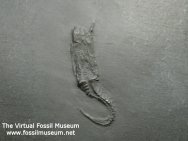
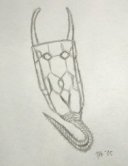
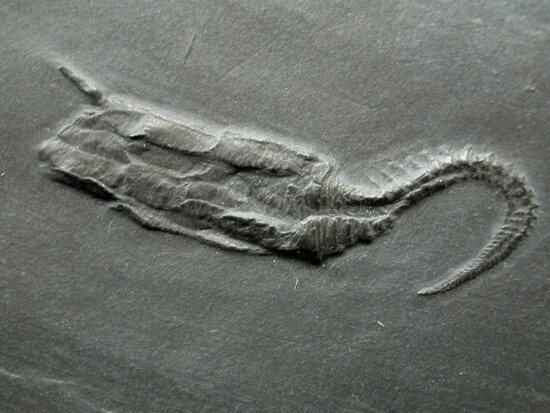
Rhenocystis latipedunculata
Phylum Echinodermata, Extinct Mitrate Stem Group (Subphylum Homalozoa, Class Stylophora
Geological Time: Lower Devonian Seigenian/Emsian Stage
Size: 29 mm by 8 mm with 25 mm “tail” on a 135 by 190 mm matrix
Fossil Site: Hunsruck Slate, Bundenbach Germany
The Hunsruck slate is famous for its fossils, many of which have pyritization present, and this specimen is an exceptionally well preserved specimen. The sites superb preservation is attributed to rapid burial and subsequent pyritization, leading to extraordinary and beautiful fossil of early Devonian life from Bundenbach area. The fossil bearing mudstones were metamorphosed during the Carboniferous into the beautiful black slate. These slate were quarried to make roofing tiles, and the quarry workers would set aside the fossils for sale. As the quarries are no longer open, future Bundenbach fossils will only be coming from present collections. Also see: Carpoid Evolution Discussion about carpoid asymmetry with Castericystis vali Cambrian carpoid
|